Pensiunea Beluga
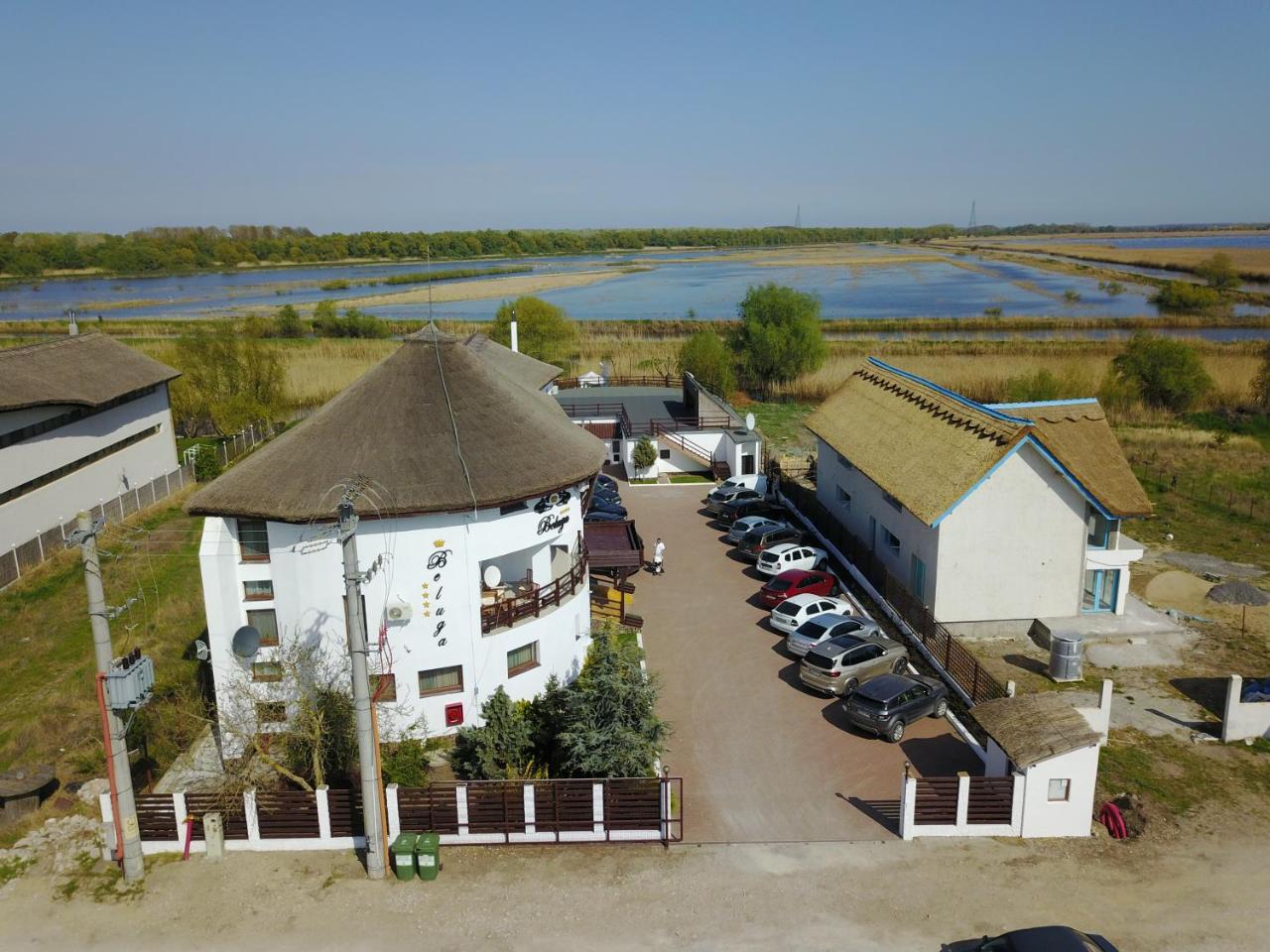


Pensiunea Beluga has a restaurant, seasonal outdoor swimming pool, a bar and garden in Murighiol. There is a sun terrace and guests can make use of free WiFi and free private parking. At the guest house, rooms come with a wardrobe. Complete with a private bathroom fitted with a shower and free toiletries, the rooms at Pensiunea Beluga have a flat-screen TV and air conditioning, and certain rooms are equipped with a balcony. All units will provide guests with a fridge. The accommodation offers a continental or buffet breakfast. Guests at Pensiunea Beluga will be able to enjoy activities in and around Murighiol, like fishing. Tulcea is 38 km from the guest house, while Izmail is 40 km from the property.
Book a room

Booking.com
What to see in Murighiol
Tulcea is a district (Judeţ) of the southeast of Romania, north of the historic Dobruja region. The capital city is Tulcea.
The human presence in Tulcea Județ is witnessed from the Neolithic. The region was inhabited in ancient times by the Dácic or Getas tribes, which were part of the Trio Group. Greek navigators discovered the country towards the end of the sixth century BC, Herodotus describes it in great detail: at that time, the limanes (Iancina/Rasim or Razelm, Galazu or beating, fidilimanu or zmeica and albastru or sateo) were still only golfos ( Argamos, Halmyris, histrios) where the jonians opened commercial positions that traded with the local getes, traces and scites. These commercial positions formed a confederation and sought alliances to escape from Persian control and then Macedonio. They allied with the kingdom of Ponto de Mitrídates. At that time, the weather was more Mediterranean than today, since the histriotes had sea pine forests, which no longer grow. The current Județ of Tulcea was for a brief period of time under the control of the Kingdom Dacio (see Dacia) in the 1st century B.C. Later, it became part of the Roman Empire, where it constituted the northern limit of the Roman province of Messia (later Escitia Minor) for seven centuries (counting the Roman Empire of the East, which did not collapse). During this period, the population was Latinized and Hellenized. The Romans built cities like Noviodunum or expanded Greek ports such as Egyssos (current Tulcea).
During the "barbaric" invasions, the current Județ of Tulcea spent successively under the control of the Slavs and the Bulgarians in the sevent (Argano, Halmyris) and the mouths of the Danube, protected by the imperial fleet, remained under the control of the Roman Empire of the East (or Byzantine Empire). The Măcin massif and the Danube delta became a shelter for the surrounding Hellenic and Latin speaking populations, which formed the Dic people whose capital was Vicina6. As there are ruins of this period under several current cities, including Tulcea (the old Aegyssos) and Isaccea, it is not known which of these cities was Vicina.